
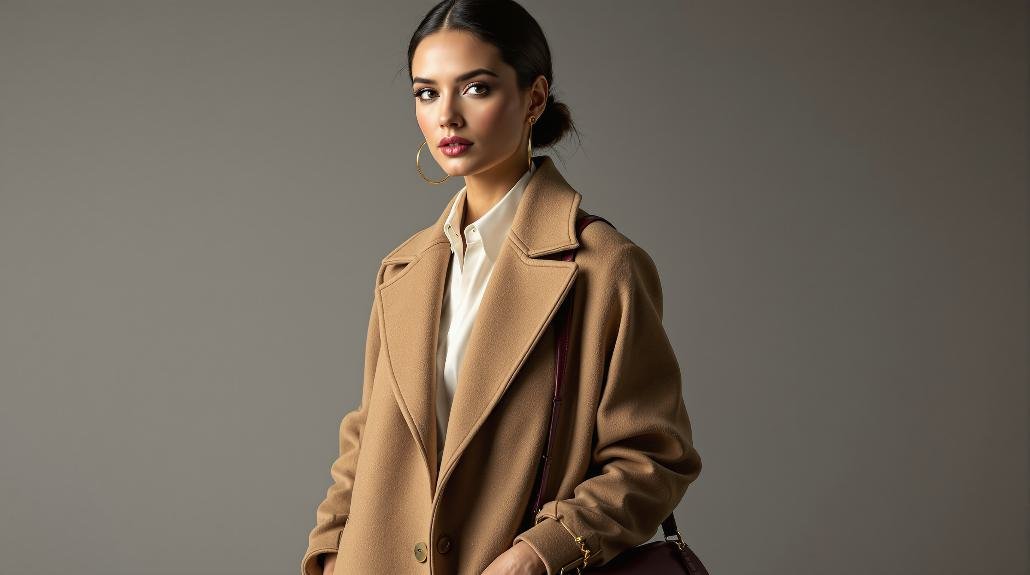
The term “investment dressing” has been so thoroughly colonised by marketing that it now functions as justification for almost any purchase above SGD 200. A Zara blazer is investment dressing. A Bottega Veneta tote is investment dressing. A Toteme coat bought at full price in December, worn twice before the season turns, is — apparently — also investment dressing. The term has drifted so far from its original meaning that it now describes its own opposite: buying for aspiration rather than utility, for identity performance rather than actual return.
The genuine version of the concept is more rigorous, and more radical. It requires honest accounting about what you actually wear, what actually holds resale value, and what the Asian luxury resale market — now among the most liquid and data-rich in the world — tells us about where smart money moves. The arithmetic is unforgiving. Most wardrobes fail it.
The Actual Maths — and Why Most People Get It Wrong
The cost-per-wear framework is simple in theory: purchase price divided by the number of wears. A SGD 1,800 wool coat worn 200 times across five seasons costs SGD 9 per wear. A SGD 180 trend coat worn four times before its silhouette dates costs SGD 45 per wear. The expensive piece is the economical one.
What makes this calculation difficult is that it requires prediction, not retrospection — and prediction demands honesty about actual lifestyle. Most cost-per-wear calculations are performed on the imaginary self: the person who attends gallery openings, Dempsey brunches, and client dinners in polished tailoring. Not the actual self who spends most days in a co-working space in Tanjong Pagar, dressed down, lunching at hawker centres on Telok Ayer Street.
The ThredUp 2025 Resale Report found that the average consumer discards clothing after just 7.4 wears. At that frequency, even a modest SGD 300 piece costs SGD 40 per wear — the equivalent of a mid-range restaurant bill for every single outing. The maths does not care about intentions.
The practical fix is unglamorous: before any significant purchase, audit the last 90 days of your actual wardrobe. Count what you reached for repeatedly. Buy more of that — not more of what you wish your life looked like. The pieces clocking triple-digit wears reveal your real style. Build around them.
What Actually Holds Value: The Category Hierarchy
Not all investment categories perform equally. A decade of resale market data has clarified the hierarchy: pieces with rarity plus genuine craftsmanship signals outperform volume fashion regardless of price tier, and the most reliable appreciation happens in leather goods and resoleable footwear — not ready-to-wear.
At the top of the resale hierarchy sit Hermès leather goods. But Fashionphile and Rebag data from early 2026 shows appreciation flattening for the most common Birkin configurations — standard sizes, Togo leather, palladium hardware — as supply has caught up with demand. Smart secondary-market positioning has moved toward pieces where production is genuinely constrained: Bottega Veneta’s Andiamo in cognac intrecciato (currently SGD 4,800 retail; trading above retail in near-new condition), THE ROW’s Margaux, and Loewe’s Puzzle Fold. These pieces are identified by construction rather than logo — which ages better and is harder to counterfeit.
At the ready-to-wear level, the resale picture is harsher. Toteme holds 40–60% of retail on secondary markets; THE ROW ready-to-wear holds similar. Most other labels depreciate to 10–20% within seasons. The practical lesson: concentrate investment in leather goods and footwear. Be more cautious with clothing.
For footwear, Goodyear-welted construction changes the investment timeline entirely. Church’s, Crockett & Jones, and Carmina can be resoled up to seven times, extending a pair’s functional life to 15–20 years. At that lifespan, a SGD 800 pair costs under SGD 1 per wear over its full life. The upfront cost is significant. The cost-per-wear is pennies.
Fabric Is the Investment, Not the Label
The most durable pieces in most wardrobes aren’t the most expensive — they’re the ones made from the right materials for their category. Understanding fiber performance is the unglamorous core skill of investment dressing, and it’s largely absent from how brands market quality.
Wool remains the workhorse fiber. Naturally antibacterial, wrinkle-resistant, and temperature-regulating, Super 100s–120s weight offers the ideal balance of refinement and durability; higher thread counts sacrifice robustness for softness in ways that reduce practical lifespan. A Super 100s blazer from a mid-range British tailor will outlast a higher thread-count alternative from a fast-fashion premium line — and perform better across Singapore’s climate transitions between air-conditioned interiors and outdoor humidity.
Cashmere’s reputation as an investment fiber deserves scrutiny. Lower-grade cashmere — two-ply or less — pills within seasons, making most budget cashmere a false economy. Four-ply Mongolian-origin constructions from Loro Piana or Brunello Cucinelli last decades with proper care. John Smedley’s merino represents the middle ground: comparable durability at a more accessible entry point, and significantly better longevity than the price suggests.
The key structural signals when shopping: seam allowances of at least 1.5cm (meaning the piece can be altered as your body changes without losing structural integrity), canvas interfacing rather than fused in tailoring, and natural fiber lining. These details are harder to market than a brand name, which is precisely why most brands don’t foreground them — and why the pieces that have them tend to be the ones worth buying.
The Asian Resale Market’s Distinct Logic
Singapore and Hong Kong now function as the most liquid luxury resale markets in Asia, and what moves through Vestiaire Collective’s Singapore listings, TheRealReal’s Hong Kong operation, and the private collectors’ networks in Jakarta and Kuala Lumpur reveals dynamics the Western fashion press hasn’t fully mapped.
Three findings hold consistently across these markets. First, condition commands a premium well above Western secondary markets: pieces at 90–100% condition trade significantly above 80% equivalents, and Asian buyers will wait for the right condition rather than compromise on price. Second, care documentation — original receipts, dust bags, boxes, authenticity cards — increases secondary prices by 15–25% over comparable pieces sold without provenance. Third, brand-period specificity matters: Daniel Lee’s Bottega Veneta, specifically the Pouch, Cassette, and early Andiamo from his 2018–2021 tenure, trade above Matthieu Blazy’s continuation work on the secondary market. Blazy’s Andiamo is tracking well, but Lee’s originals remain the resale benchmark for that house.
The implication for buyers is practical: care documentation matters as much as the purchase itself. Keep receipts. Store with original packaging. Note what you paid and when — not for tax purposes, but because this data determines your exit price when the piece eventually turns over. Investment dressing with an Asian resale exit in mind is materially different from investment dressing as a vague philosophy of quality.
Why Most Wardrobes Fail the Test
The closet full of unworn pieces — the blazer that was “worth it at the sale price,” the cashmere that pilled after three wears, the designer bag that turned out to be the wrong season’s hardware for the secondary market — represents the accumulated cost of investment dressing performed as identity rather than accounting. These are not investment pieces. They are expensive mistakes reclassified to avoid the discomfort of regret.
A 2025 wardrobe tracking study found that most shoppers wear their so-called investment pieces fewer than ten times — nowhere near the 50–100 wears required to justify premium pricing on a cost-per-wear basis. Meanwhile, genuine workhorses — the lived-in blazer, the reliable knitwear, the shoes requiring no break-in period — clock 80+ wears annually, delivering pennies-per-wear value regardless of what they cost.
The gap between what people think they’re buying and what they actually wear is the central failure mode. It gets papered over by the marketing language of “timelessness,” “quality,” and “longevity” — none of which matter if the piece never leaves the closet.
The Four Rules That Hold Up Under Honest Accounting
Investment dressing, stripped of marketing language, collapses into four rules.
Buy fewer pieces at higher quality in categories where you have proven wear frequency. If you reach for blazers daily, a SGD 1,500 blazer worn 400 times costs SGD 3.75 per wear — cheaper in real terms than a SGD 300 blazer worn 20 times. The arithmetic rewards frequency.
Prioritise leather goods and resoleable footwear over ready-to-wear. The resale data is cleaner, the appreciation dynamics more predictable, and the construction longevity dramatically extends the investment timeline in ways clothing cannot match.
Maintain properly. Research from textile preservation specialists indicates that correct garment care — appropriate storage, cleaning frequency, immediate minor repairs — extends clothing lifespan by 40–60%. A piece worn 100 times and maintained in near-new condition retains resale value. The same piece worn carelessly retains none. The infrastructure of care (shaped wooden hangers, cedar blocks, a quality steamer, an ongoing relationship with a skilled tailor) is itself an investment that compounds returns over time.
Know your exit. The best investment wardrobes are designed with resale in mind from the purchase stage — which means selecting pieces that perform in the Asian secondary market, retaining documentation, and understanding that condition and provenance command premiums in Singapore and Hong Kong that can add meaningfully to the total return calculation.
The arithmetic is simple. The discipline to run it honestly — on every significant purchase, before the transaction rather than after — is harder. But the maths doesn’t negotiate, and a wardrobe built on real numbers rather than aspirational ones performs considerably better over time.

Lina, Founder, Creative Director & Editor-in-Chief
The mind behind Arahkaii. Lina launched the platform to spotlight the designers and brands she kept discovering and thinking “why isn’t anyone talking about this?” She brings a thoughtful, intentional approach to storytelling. She leads the editorial team with a focus on clarity, creative depth, and modern femininity, shaping narratives that feel both elevated and deeply human.She shapes everything from content strategy to editorial tone, is hands-on with every feature, and believes the best content makes you stop scrolling. Currently juggling platform-building, brand outreach, and defending her slow morning ritual as essential creative practice.

